
UPSC CSE Prelims 2026: Master History Revision – Smart Strategies & PYQ Focus for Sarkari Naukri Aspirants
UPSC CSE Prelims 2026: Master History Revision
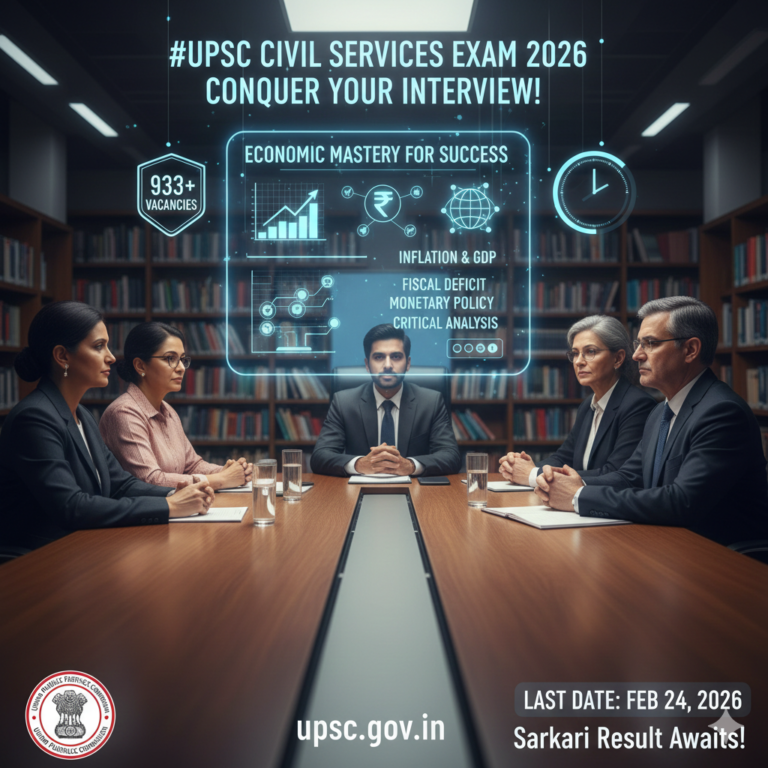
For any Sarkari Naukri aspirant, the UPSC Civil Services Examination (CSE) is the ultimate goal. History is a high-yield subject in the Prelims, often accounting for 15-20% of the General Studies Paper-I. To secure a top Sarkari Result, your revision must be strategic, shifting from passive reading to active, exam-oriented analysis.
UPSC CSE 2026: Exam Highlights
| Feature | Details |
| Organization | Union Public Service Commission (UPSC) |
| Post Name | IAS, IPS, IFS, & Central Group ‘A’ Services |
| Prelims Exam Date | 24 May 2026 (Confirmed) |
| Mains Exam Date | 21 August 2026 onwards |
| Application Start | Postponed (Originally 14 Jan 2026; Check Website) |
| Official Website | [suspicious link removed] |
Eligibility & Selection Process
To qualify for the Latest Job Notification of UPSC 2026, candidates must meet the following:
-
Education: A Bachelor’s Degree from a recognized university. Final year students are eligible for Prelims.
-
Age Limit (as of 1st Aug 2026): 21 to 32 years for General/EWS.
-
OBC: Up to 35 years.
-
SC/ST: Up to 37 years.
-
-
Selection Stages:
-
Prelims: Two objective papers (GS & CSAT). Screening only.
-
Mains: 9 descriptive papers (1750 marks).
-
Personality Test: Final interview (275 marks).
-
Smart History Revision Strategies
History is vast, covering Ancient, Medieval, and Modern India. Use a tiered revision approach:
| History Segment | Focus Areas | High-Yield Topics |
| Modern India | Freedom Struggle (1857-1947) | Gandhian Movements, Socio-Religious Reforms. |
| Ancient India | Art & Culture, Social Evolution | Indus Valley, Buddhism/Jainism, Mauryan Art. |
| Medieval India | Administration & Terminology | Delhi Sultanate terms, Mughal land revenue. |
The Power of PYQ-Based Revision
Previous Year Questions (PYQs) act as a compass for your preparation. Instead of just solving them, analyze the “Logic” behind UPSC’s questions:
-
Identify Recurring Themes: Notice how UPSC frequently asks about Bhakti-Sufi saints or Tribal/Peasant uprisings.
-
Analyze the Distractors: Research all four options in a PYQ. Often, an incorrect option from one year becomes the subject of a main question the next year.
-
Concept vs. Fact: Use PYQs to see if the focus is on a specific date (rare) or the underlying socio-economic impact (common).
Your Step-by-Step Success Plan
-
Check the Official Portal: Keep checking upsc.gov.in for the revised application dates for 2026.
-
Daily Timeline Drills: Spend 15 minutes daily reviewing a mental timeline of major events to avoid chronological confusion.
-
The “2-Hour Rule”: Dedicate 2 hours every evening solely to PYQ solving and analysis.
-
Mock Simulation: Take at least one full-length GS mock test every Sunday to build exam stamina.
Implementing these strategies early will put you ahead of the competition and bring you closer to a prestigious Sarkari Naukri in 2026.
History PYQ Strategy for UPSC Prelims
This video provides a deep dive into analyzing previous year questions to predict trends for the upcoming 2026 Prelims.